In remembering the efforts of those who served during the Civil War, the woman hardly ever comes to mind. Far more often people think of the men who fought and died with valor for a worthy cause. Although most women may not have physically fought for their nation (with the exception of Sarah Rosetta Wakeman), a large number served in other ways nonetheless. By forming local commissions, aid societies, or nursing the wounded back to health, there were a number of ways that women made their indelible mark on the conflict— ensuring that the fight for victory did not lie merely in the hands of men.
How Women Helped
When asked what the role of women in the Civil War was, the mind likely immediately conjures up the image of a battlefield nurse. However, there were an abundance of ways that women could become involved in the conflict without directly interacting with the battleground. There were a number of different posts that women could join at the time— official army nurses, the Sanitary Commission, the Christian Commission, local aid societies, etc. These jobs could be held in any number of locations as well, whether it be the field, hospital, the Navy, or those stationed with specific Corps. Therefore, it is difficult to estimate how many women served in some capacity during this time period, as the various number of jobs made it difficult to gauge true numbers.
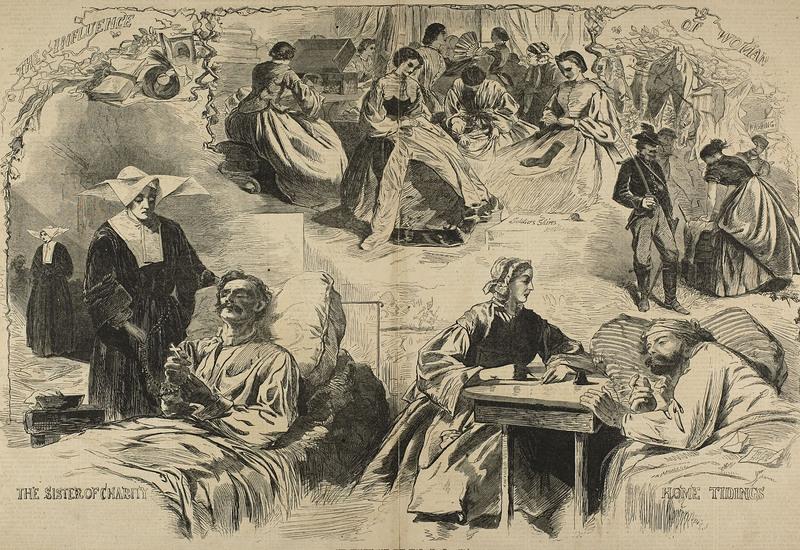
In Union County specifically, a large number of women organized the Sanitary Aid Society of Sunbury. By supplying food and supplies to passing trains, they were able to help clothe, feed, and even entertain traveling soldiers. It is estimated that approximately 40,000 soldiers were fed at the train station— a number that has likely been downplayed. However, the most impactful way the women of Union County served was indeed through nursing— by tending to injured and sick soldiers who were sent from the battlefields for medical attention. The court house in town was used as a temporary hospital, where women from all over the county would work to provide aid to troops in need. Although these women were away from direct lines of battle, many women weren’t so lucky.
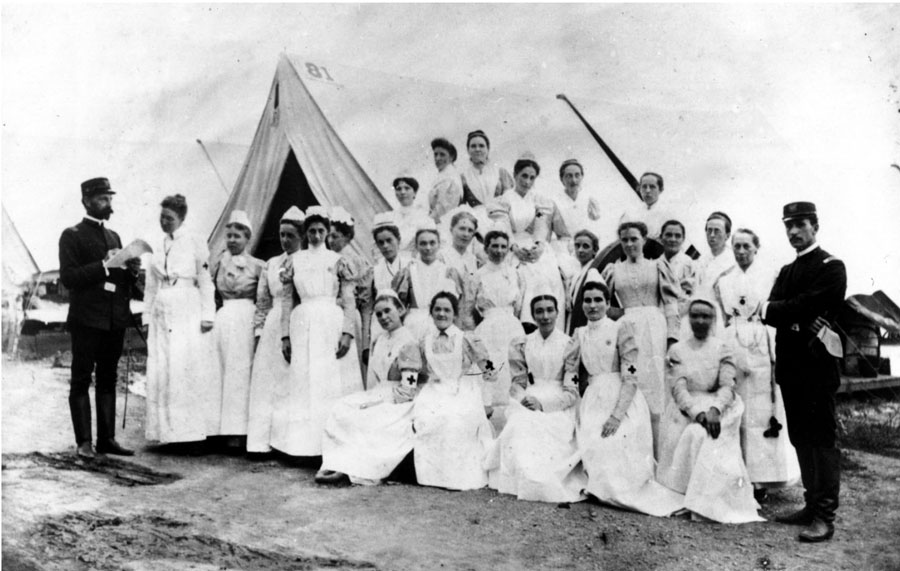
Conditions for nurses were often bleak at best, incredibly gruesome at worst. Although it is impossible to know the exact number of women who served as nurses during the conflict, it is approximated that over twenty thousand women joined the ranks for the Union army alone, with similar numbers estimated for the Confederacy. Nursing was, in many ways, the single most effective manner for women to serve their nation during the war. However, it was also difficult, dangerous, and deadly.
Tracey McIntire, the Director of Communications at the National Museum of Civil War Medicine, spoke about the dangers of nursing during this time period. “A lot of these women were showing up while the battle was still going on. They were under fire and sometimes they talk about being in these field hospitals and artillery rounds exploding nearby,” she said, going on to elaborate, “The idea at the beginning of the war was that medical facilities or medical personnel should not be fired on. But these battles are going on and there’s all these stray shots happening, accidental explosions— things like that going on can definitely endanger the medical personnel… During the battle their lives were at risk”.
The Bucknell Nurse Who Made History
During the time of the war, Bucknell University— then known as the University of Lewisburg— ceased all classes to shift attention to the war effort. While many male students joined the ranks of the army, the students at the female institute were encouraged to aid in efforts in other manners— including Annie Bell, a recent graduate from the class of 1858. Bucknell University senior Cat Jamison has been working tirelessly for months making a documentary about several individuals from the University of Lewisburg who served in some capacity during the war, including Miss Bell. For Jamison, a large part of her fascination with the brave young nurse surrounds her dedication to the country and to doing what was right. “Annie Bell was just really invested in the cause and had this patriotic spirit that she wanted to bring forth”, she stated. And more importantly, “she didn’t want to be someone sitting on the sidelines just because she was a woman.”
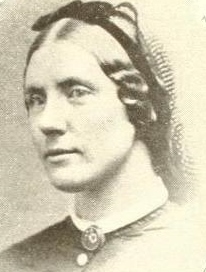
Annie Bell immediately applied to a paid position with Dorothea Dix’s nurses, yet was rejected on the basis of her young age. However, she was determined to not let the refusal stop her. She volunteered and eventually won over Dix’s respect by tending to wounded warriors at the Battle of Antietam and Harpers Ferry. Eventually, she was promoted to a paid position, where she would go on to serve some of the war’s most gruesome battlefields— including the Battle of Chickamauga, the Battle of Missionary Ridge, and even the infamous Battle of Gettysburg.
Miss Bell, too, suffered from the stresses and effects of nursing under such tense and dangerous conditions. In a letter to her mother, she once wrote “I have just come in from my ward, and am so tired, that if I was at home I could go to bed”. Jamison sympathizes with her fatigue, stating “You’re losing people. People are dying. And it’s hard to see people in pain, especially someone who cares so much… She’s talking to her mother, someone she could be honest with about what’s really going on, and she’s just exhausted”.
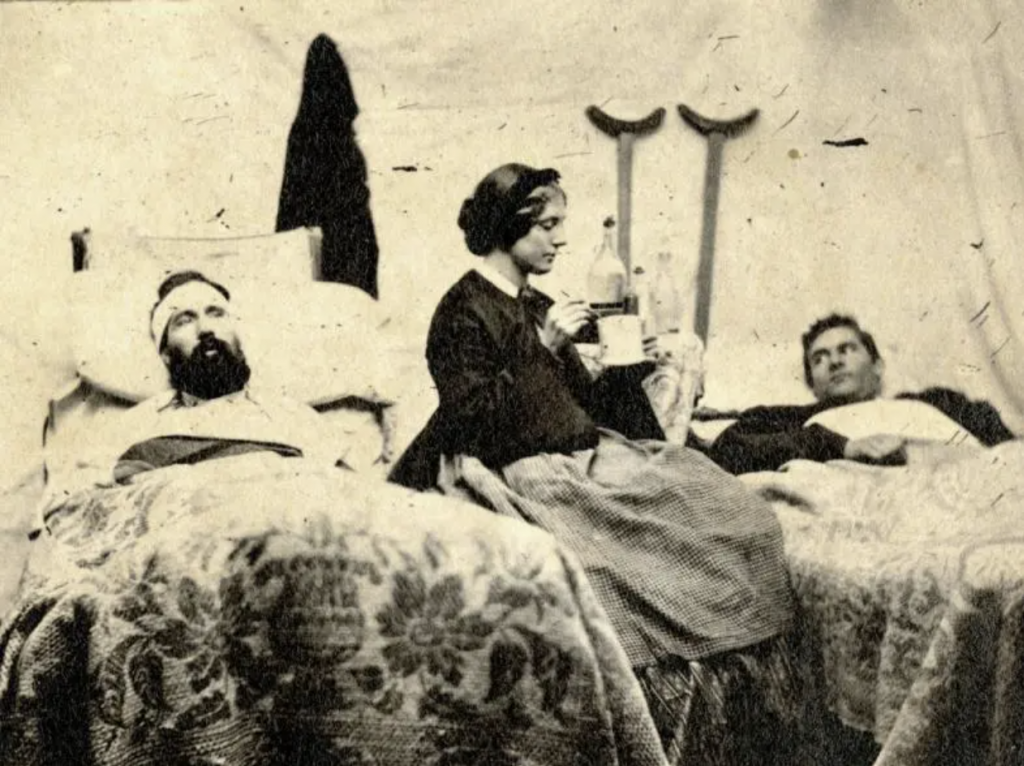
However, the true legacy of Annie Bell lies in the grains of a sepia toned photograph that has since become famous. In the image, the virtuous caretaker nurses two wounded soldiers back to health. Although initially reluctant to release the photograph to the public, Bell eventually agreed to share the rights when she realized what benefits her soldiers might reap from increased public awareness. The photo raised $78,000 (adjusted for inflation) at the Northern Ohio Sanitary Fair, and Miss Bell poured all of her personal earnings from the image back into war efforts. However, the photograph eventually went on to become incredibly well-known among Civil War historians, cementing her status as a figurehead for nursing as a whole. “If you go to Civil War museums and they talk about nurses in the war, she is the face of female caretakers,” reflects Jamison.
Dr. Mary Edwards Walker: The Female Surgeon
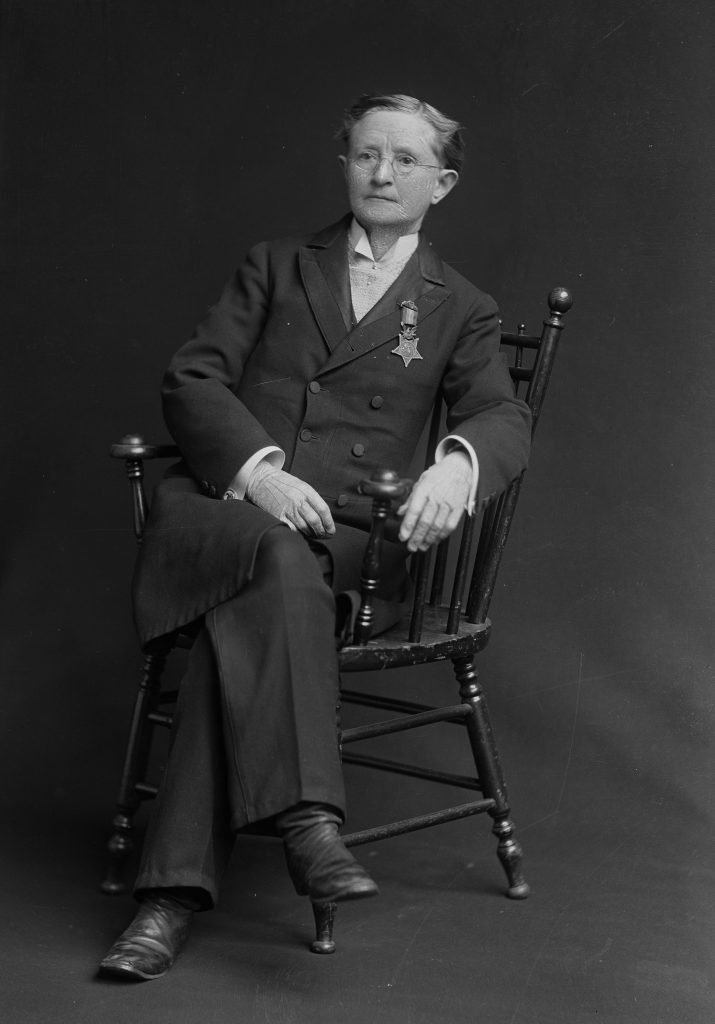
However, one woman rose above her ranks and was able to attain a position not just as a nurse, but as a surgeon. By the time of war, Dr. Mary E. Walker had already made history as the first female graduate of the Syracuse Medical College to go on to become a surgeon. When conflict swept through her beloved nation, she was quick to join the war effort. As a staunch abolitionist, she felt it her duty to aid in the fight in any way she could. After a repeated number of failed applications to serve as a medical officer, she volunteered as a nurse instead.
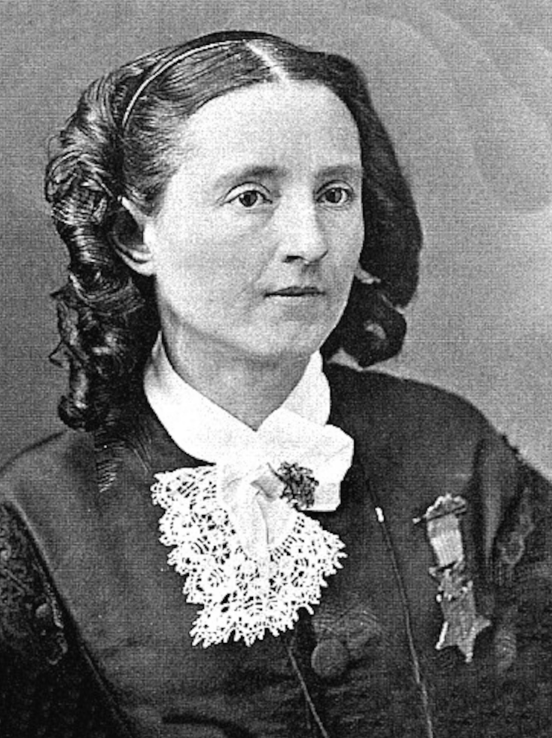
However, Walker was determined to become a surgeon. To Kathy Barnes, an actress who portrays the titular role in the one-woman play “Independence: The True Story of Dr. Mary Walker”, Walker’s resilience was the most inspiring aspect of her story. “Every female doctor of the time had a difficult time, but she was an army surgeon and she wanted to be a surgeon… She felt ‘I can help with this war’. Really the war affected her, so she wanted to do something… That was really what set her apart was the war event and her going ‘Okay, I’m going to help. How can I help? I can be a surgeon.’”
In 1863, her application was finally accepted and she went on to become the first female “Contract Acting Assistant Surgeon (civilian) for the U.S. Army. However, several months later she was captured by Confederate forces, prematurely ending her service to her beloved Union. After being freed as part of a prisoner exchange, she was contracted again to be an assistant surgeon in Ohio, and served the rest of the war at the Louisville Women’s Prison Hospital. In 1865, she made history as the first woman to receive the Congressional Medal of Honor from President Andrew Johnson as an acknowledgment of her bravery and meritorious service. Additionally, she remains the only woman to have an army base named after her, and was recently minted on the quarter. As for what’s next? “Hopefully her story will continue being told in these types of ways,” reflects Barnes. “That’s what I want for her. I want her story to be told so that people know her name as well as they know Florence Nightingale”.
Women like Annie Bell and Dr. Mary Walker may be exemplary, but they are not outliers. Thousands of women helped war efforts in a variety of different ways. “I think there’s something really, really special about when someone just believes so strongly in something that they put themselves at risk to protect it,” says Jamison. “And I think, especially as [women], [they] didn’t have the same security blanket of camaraderie and respect in the same way the soldiers returning from war have… [they’re] so important, but it’s not always the face of everything.” These women, for the most part, didn’t receive honors, pensions, or even acknowledgement. But the victory of the Union would have been impossible without them. Sometimes the true angels of the battlefield are reduced to mere ghosts in our history.
Recommended Reading
- They Fought Like Demons: Women Soldiers in the Civil War by DeAnne Blanton and Lauren M. Cook
- An Uncommon Soldier: The Civil War Letters of Sarah Rosetta Wakeman, alias Pvt. Lyons Wakeman, 153rd Regiment, New York State Volunteers, 1862-1864 by Sarah Rosetta Wakeman (compiled by Lauren M. Cook, forward by James M. McPherson)
Articles
- Annual Legacies: Annie Bell by Kathryn Lewis for the American Civil War Museum
- Female Nurses During the Civil War by Paige Gibbons Backus for the American Battlefield Trust
Full Interviews
Works Cited:
- https://www.battlefields.org/learn/articles/female-nurses-during-civil-war#:~:text=Over%2021%2C000%20women%20served%20in,those%20women%20being%20African%20American.
- https://www.womenshistory.org/education-resources/biographies/mary-edwards-walker
- https://ahec.armywarcollege.edu/exhibits/CivilWarImagery/Civil_War_Nurses.cfm
- https://www.history.com/news/nursing-women-civil-war
- https://www.roswellpark.org/cancertalk/202005/battlefield-bedside-great-nurses-civil-war
- https://acwm.org/blog/annie-bell/
- https://commons.wikimedia.org/wiki/File:Mrs._Annie_Bell_Stubbs,_c._1910.jpg#:~:text=Annie%20Bell%20Stubbs%20was%20a,Chancellorsville%2C%20Gettysburg%2C%20and%20Nashville
- http://civilwarrx.blogspot.com/2015/12/sarah-elizabeth-dysart-civil-war-nurse.html
Leave a Reply